
Published on
The 14th edition of the Young Scientists’ Symposium took place on June 4–5, 2026, at the European Institute of Chemistry and Biology (IECB) in Pessac
A must-attend event for young researchers at the chemistry-biology interface.
On June 4–5, 2026, the IECB hosted the 14th Young Scientists’ Symposium (YSS, https://yss2026.sciencesconf.org), a scientific conference organized by and for PhD students and postdocs. Dedicated to the chemistry-biology interface, the event brought together students and early-career researchers from institutions worldwide to share their work, exchange ideas, and build new collaborations in a dynamic and convivial atmosphere.
YSS 2026 delivered an ambitious program, featuring three internationally renowned keynote speakers.
Professor Ollala Vazques (Department of Chemistry, University of Marburg, Germany) presented her group’s work on developing chemical biology tools. Her research focuses on nucleic acid recognition, RNA-guided therapeutic reactions, and the design of optochemical tools that enable precise spatiotemporal control of biological processes. In her talk, she illustrated how photosensitive molecules—such as fluorophores, photosensitizers, and photoswitches—are used to label multidrug-resistant bacteria, develop new photodynamic therapy approaches, and, in particular, control gene expression with light.
Dr. Marion Jasnin (Helmholtz Munich, Germany) shared her work on studying the three-dimensional architecture of the actin cytoskeleton directly within cells using in situ cryo-electron tomography. A specialist in this technique, she combines cutting-edge approaches—cryogenic focused ion beam milling (cryo-FIB), AI-assisted image analysis, and mathematical modeling—to understand how actin networks organize and generate the mechanical forces required for cellular functions. She demonstrated how reconstructing actin filament nucleation history from cryo-tomography data revealed a multilayer helical architecture of podosomes and extended the classical dendritic nucleation model into three dimensions. She also presented applications to endocytosis in budding yeast and the development of CryoAll, a Vision Transformer-based model for automating cellular structure segmentation and protein structure determination, paving the way for time-resolved in situ structural biology.
Professor Alexandre M.J.J. Bonvin (Utrecht University, Netherlands), a global expert in molecular modeling and protein-protein docking, introduced the HADDOCK platform (High Ambiguity Driven protein-protein DOCKing), used by thousands of researchers worldwide. The platform integrates experimental data with computational approaches to elucidate the molecular mechanisms underlying key biological processes. Prof. Bonvin emphasized the importance of experimental data and encouraged young researchers to critically assess tools like AlphaFold.
Young researchers also presented their work through oral presentations and poster sessions. A jury of researchers and engineers awarded prizes to four outstanding contributors: Adeline Cœugnet and Yaëlle Guiberteau (best oral presentations) and Salma Moumou and Akanksha Jain (best posters).
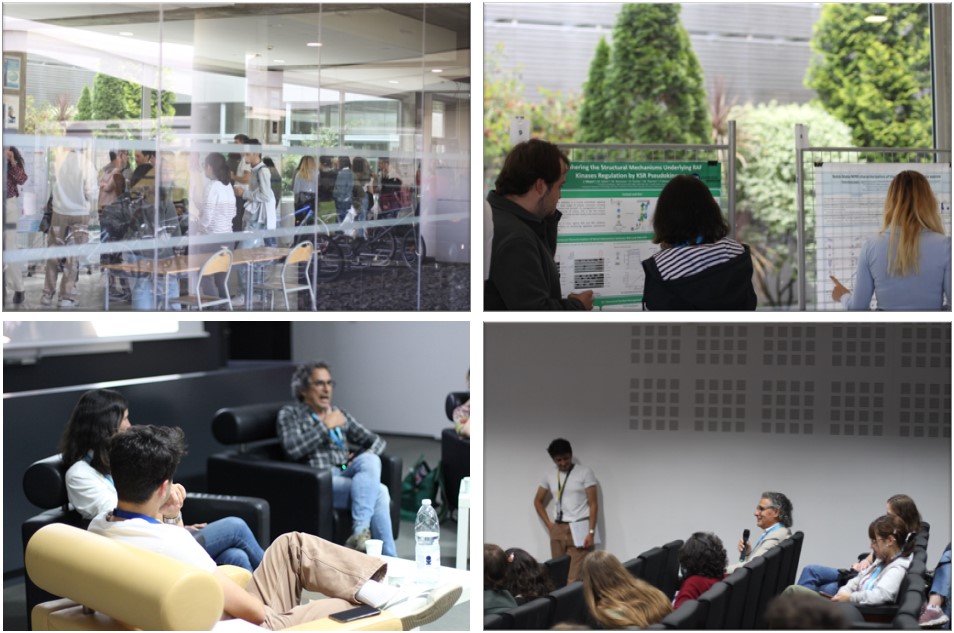
This edition also hosted a roundtable discussion titled “The Future of Science,” exploring the evolution of scientific careers and opportunities for young researchers. The panel featured four speakers with complementary backgrounds:
- Dr. Marion Mathélié-Guinlet (CBMN – CNRS/University of Bordeaux/Bordeaux INP)
- Dr. Carlos Mendoza-Palomares (Research Program Coordinator, University of Bordeaux)
- Cécile Everard (Science journalist and international correspondent)
- Dr. Gabrielle Guesdon (Synthetic biology and genome engineering specialist, now at Constructive Bio in the private sector)
They shared insights on career paths in academic research, scientific project management, communication, and the private sector, addressing challenges in career development, the importance of networking and mentorship, skills beyond research, and how to leverage one’s background to create new opportunities.
With over 120 participants, this 14th edition confirmed YSS as a major annual event for the young researcher community in chemistry and biology in Aquitaine. The organizers warmly thank all participants, speakers, partners, and sponsors for their contributions. YSS will return in 2027—stay tuned for updates!
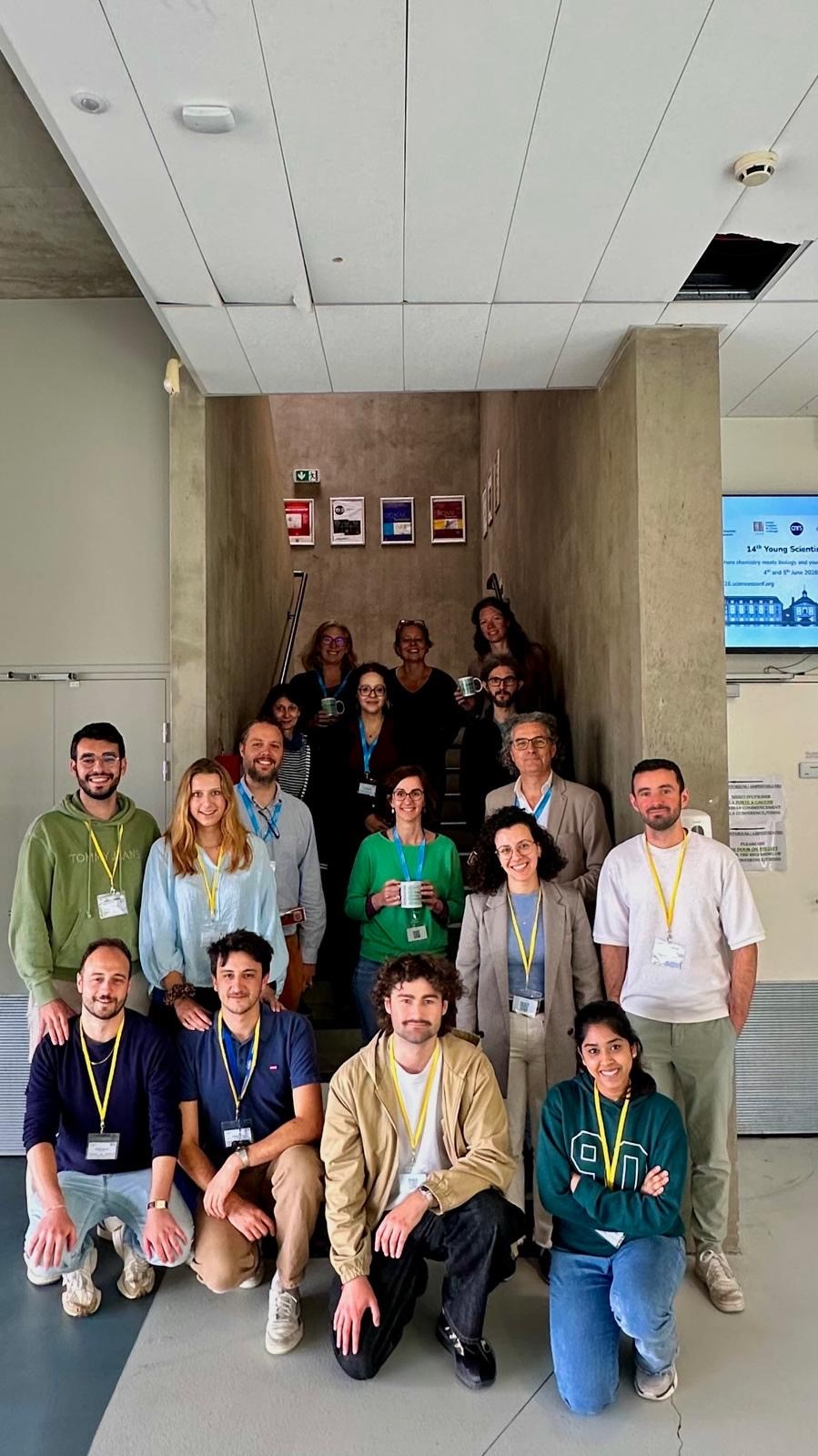
Photo of the YSS 2026 organizing committee, members of the oral and poster presentation jury, and invited speakers
First row : Nathanaël Benoit, Louis Rouillan, Martin Lefeuvre, Anagha Kallisseri Parambil Au Middle : Nicolas Sola, Lou Camoin, Pierre Maisonneuve, Marion Jasnin, Alexandre Bonvin, Ana Álvarez-Mena, Hugues Samueli Last row: Marie-France Giraud, Nadia El Mammeri, Thibaud Renault, Emilie Pouget, Axelle Grélard, Lucile Fischer